

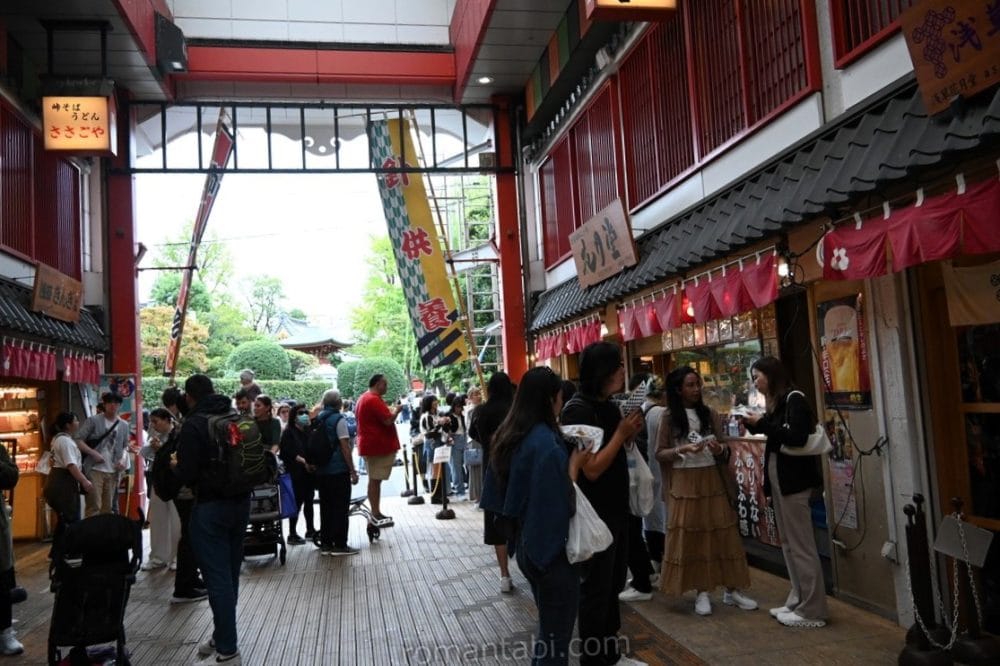
Turn off Nakamise Street's main crush of foot traffic and you'll find Nishi-Sando — a 100-meter covered arcade with a cypress-wood floor, a kabuki-theater-style entrance arch, and noticeably fewer people photographing the same three feet of pavement as you.
This guide covers the street's history, where to eat, and the shops worth a look — everything I found walking it myself.
What is Nishi-Sando Shopping Street?
What Makes It Different
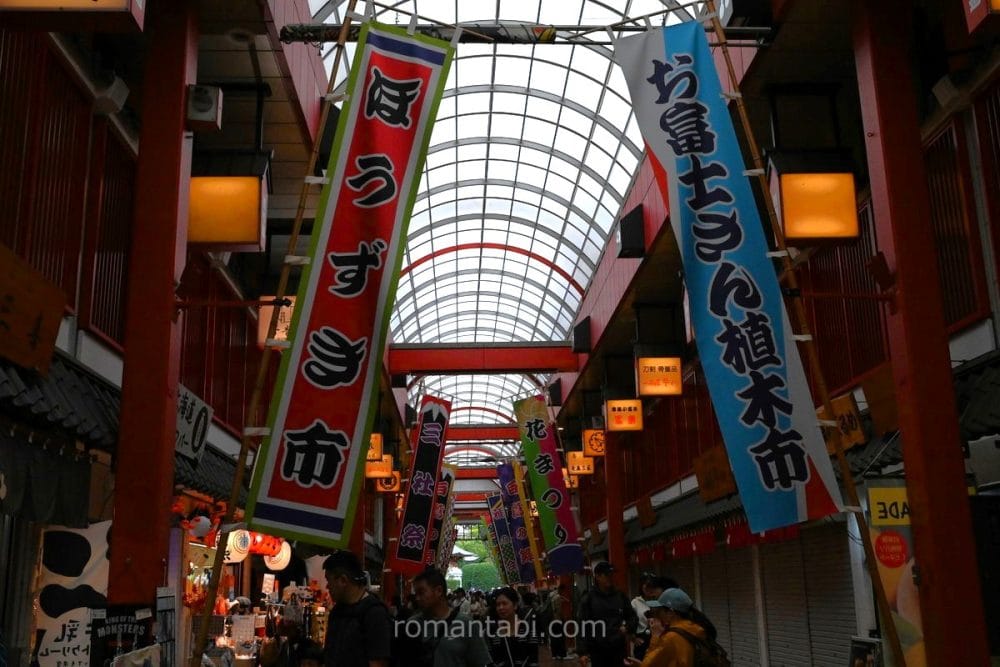
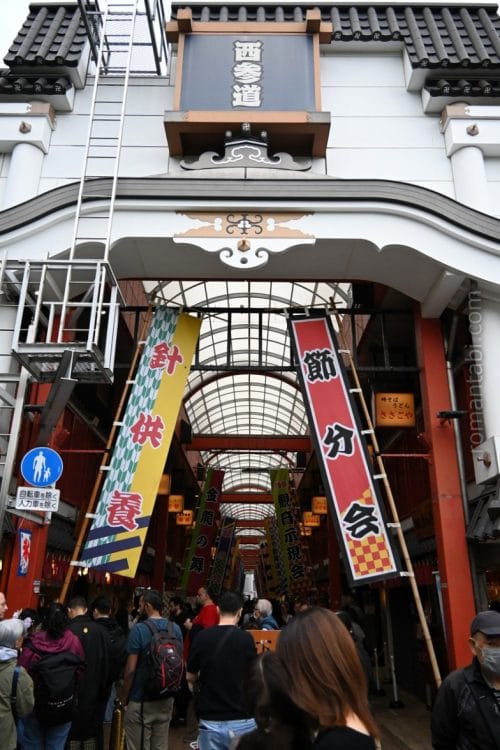
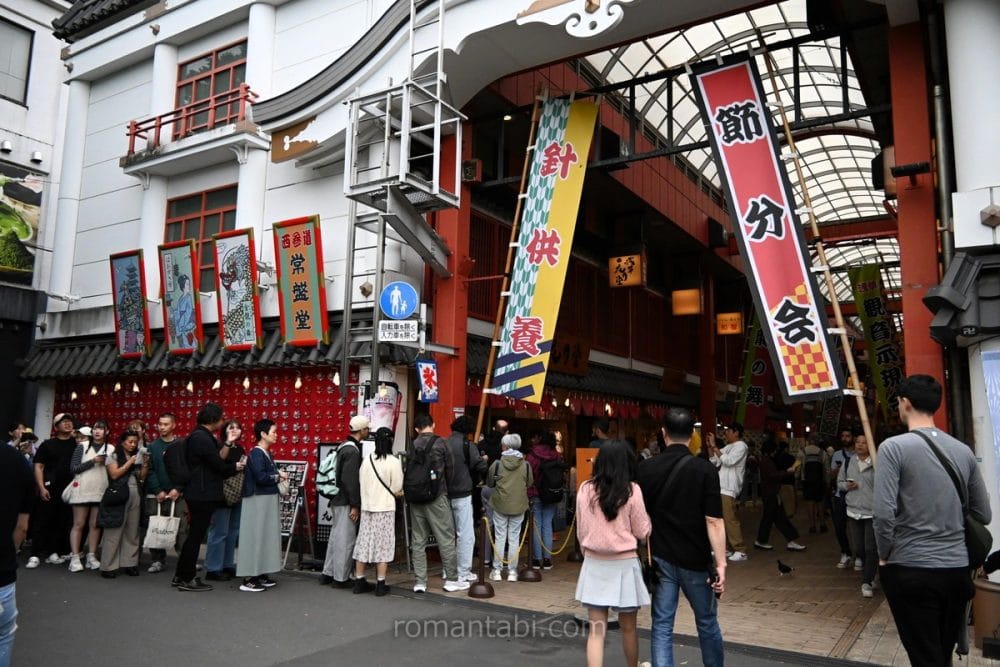
Nishi-Sando connects Senso-ji to the old Rokku entertainment district, and it's built with a distinctive touch: the walkway is floored in cypress wood rather than concrete, giving the whole arcade a warmer, more traditional feel than most covered shopping streets. The entrance is marked by a striking arch modeled on kabuki theater architecture, and the full 100-meter stretch is decorated with festival banners (nobori) tied to Asakusa's Sanja Matsuri.
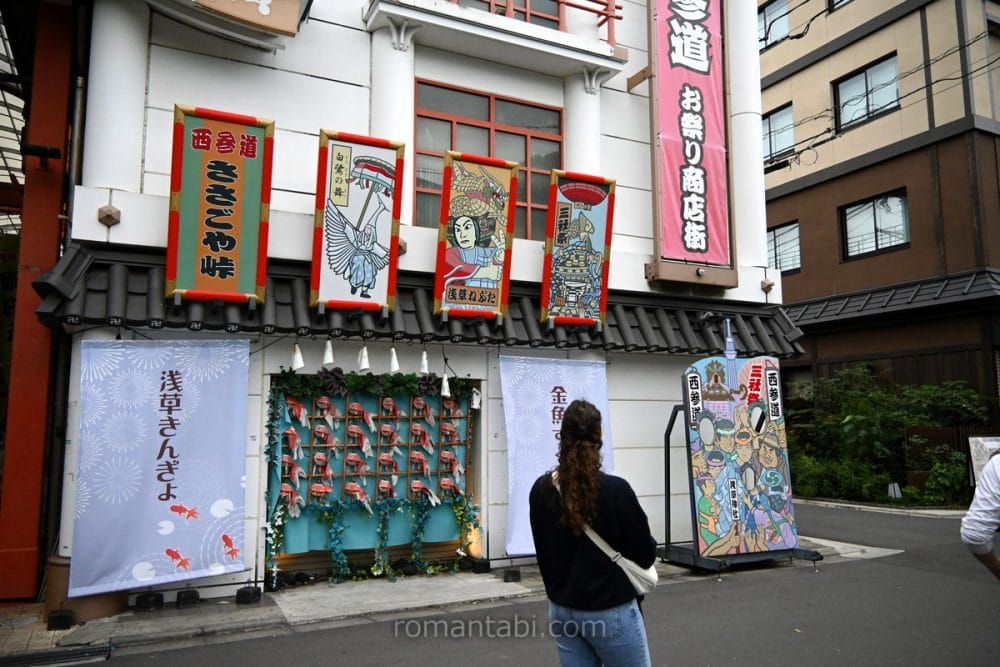
You'll find traditional Japanese footwear, samurai swords and antiques, goldfish scooping, and street food — all under a covered roof, which makes it a solid backup plan on a rainy day. It's noticeably calmer than Nakamise Street, and a good stop whether you're coming from the temple or just looking for a quieter slice of Asakusa.
History and Modern Character
Nishi-Sando was originally built in 1954 as a practical arcade for local temple-goers and merchants, and was renovated in 2013 into its current festival-themed design. It's kept its old-guard shops — swords, dance costumes, traditional footwear — while adding newer spots aimed at visitors. Look out for the street's mascots too: Kurobe, a black gourd, his wife Okaki, and their bright green baby Moetan — a small, slightly odd detail that somehow fits the street's personality.
What Does "Nishi-Sando" Mean?
Nishi-Sando (西参道) literally means "West Approach" — a reference to its position on the west side of Senso-ji. It's been a route for pilgrims and visitors for a long time, well before it took on its current festival-themed look.
Getting There
| Address | 2-7-13 Asakusa, Taito City, Tokyo 111-0032 |
| Official site | asakusaomatsuri.com |
- Ginza Line Asakusa Station — about 8 minutes on foot
- Toei Asakusa Line Asakusa Station — about 8 minutes on foot
- Tsukuba Express Asakusa Station — about 3 minutes on foot
Where to Eat
Asakusa Kagetsudo: Jumbo Melon Bread
Founded in 1945, this bakery sells around 3,000 melon bread a day — crisp crust, fluffy interior, and a queue most mornings. Go early if you want to be sure of one.


Official website: Asakusa Kagetsudo
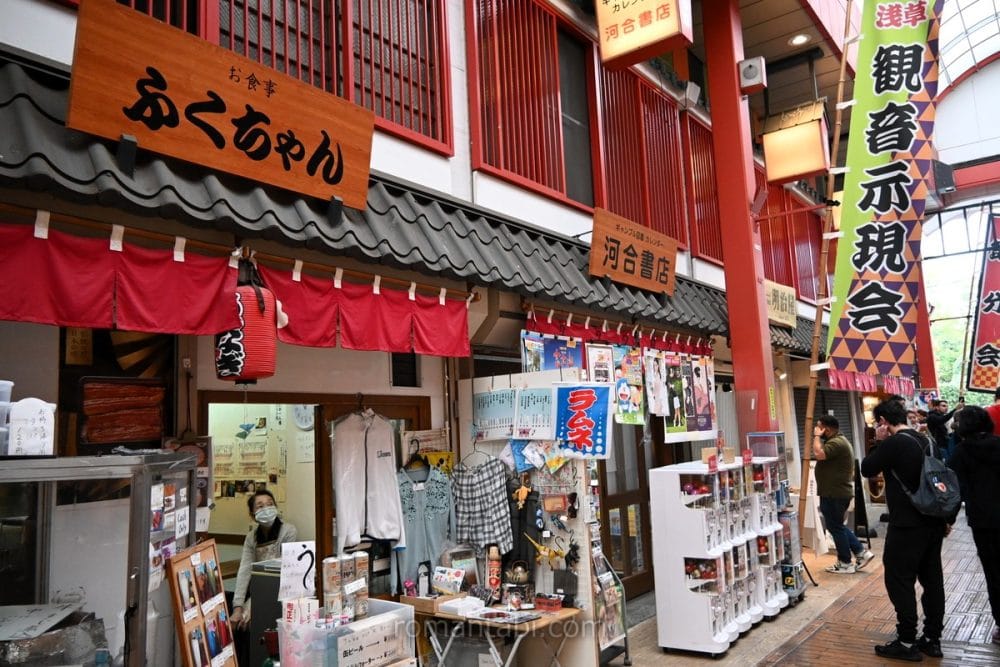
Fukuchan: Beef Tendon Stew
A deli-style shop known for beef tendon stew, simmered until it falls apart, with a sauce that's rich without being heavy. Takeaway bento and fried snacks like croquettes and menchi-katsu round out the menu.
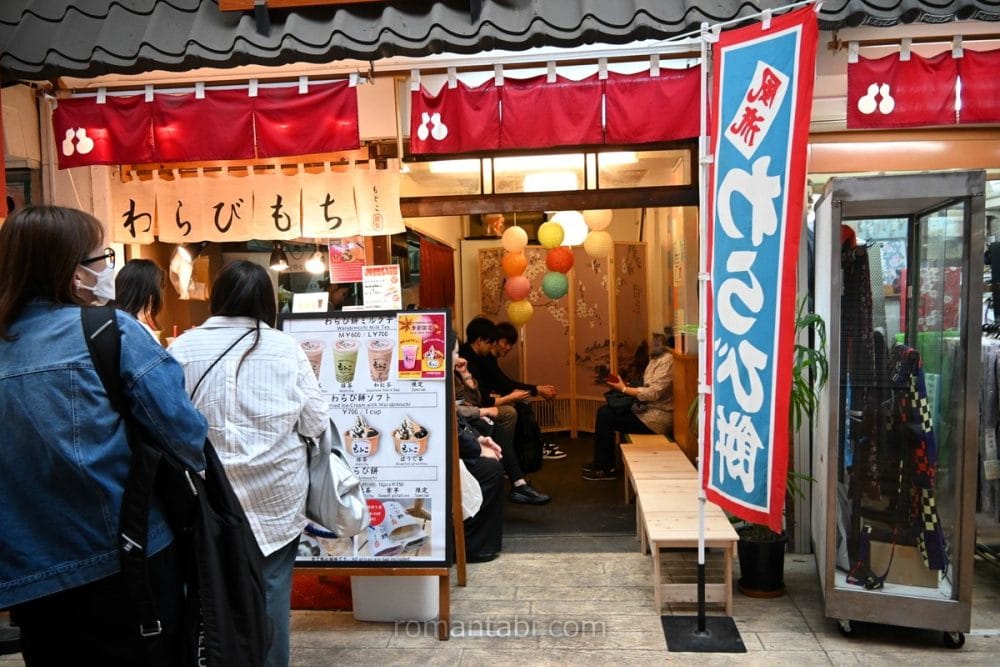
Warabimochi Motoko
Fresh warabimochi with a soft, jelly-like texture, topped with kinako and kuromitsu — a good sit-your-feet-down sweet break mid-walk.
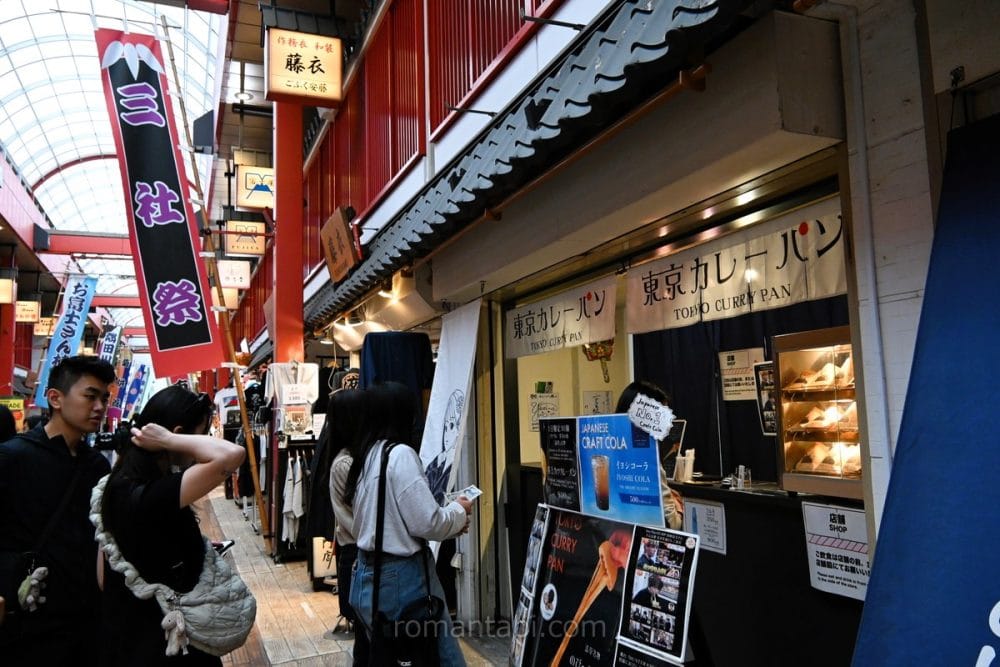
Tokyo Curry Bread
Fried curry bread with a golden crust and a genuinely spiced filling, best paired with the shop's own craft cola, Iyoshi Cola.

Shops Worth a Look
Asakusa Fujiya: Traditional Footwear
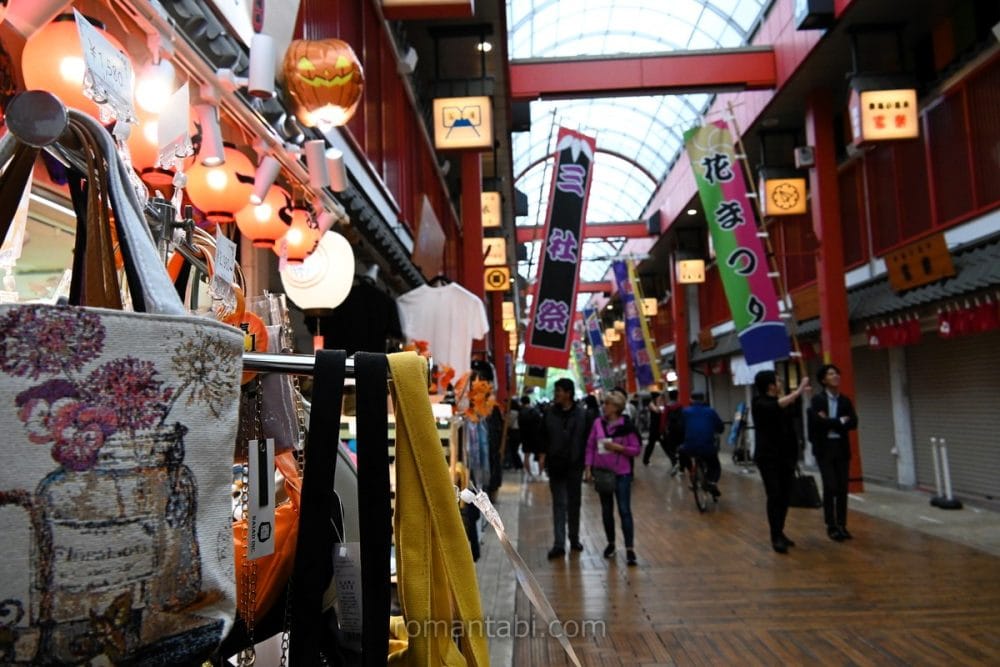
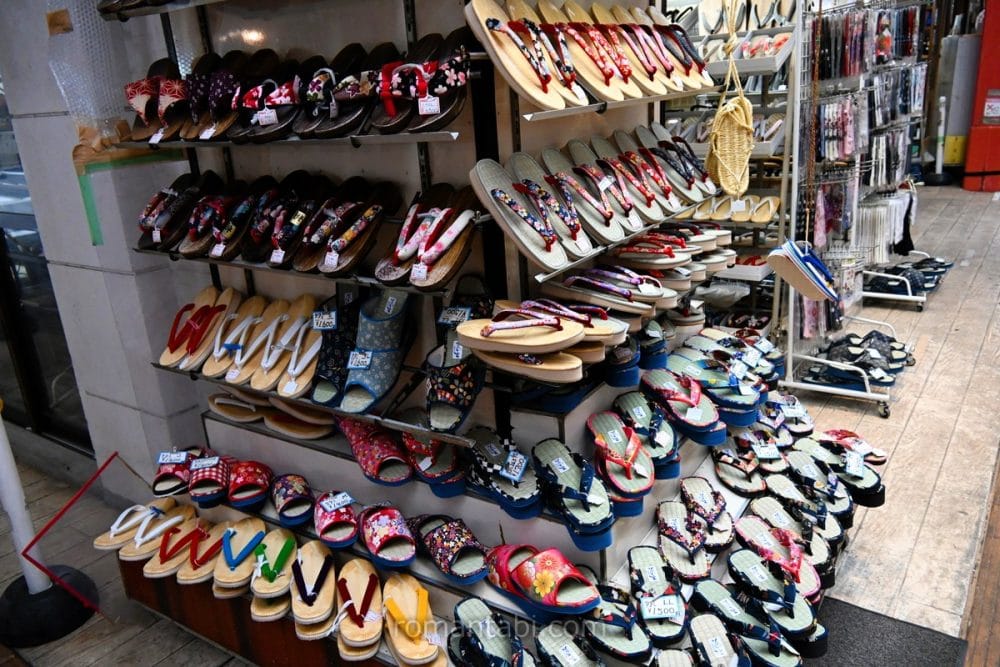
Geta, zori, and yukata in patterns ranging from bold florals to understated classics — much of it handmade. Staff are happy to help if you're new to wearing traditional footwear.

Yamada Dance Costume Shop

A specialist in dance and festival costumes gathered from across Japan — worth a browse even if you're not shopping for a full outfit.
Suzuya: Stage Props
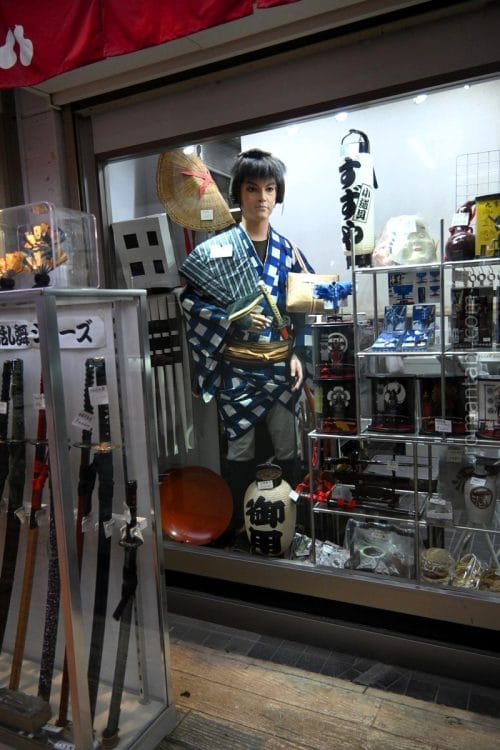
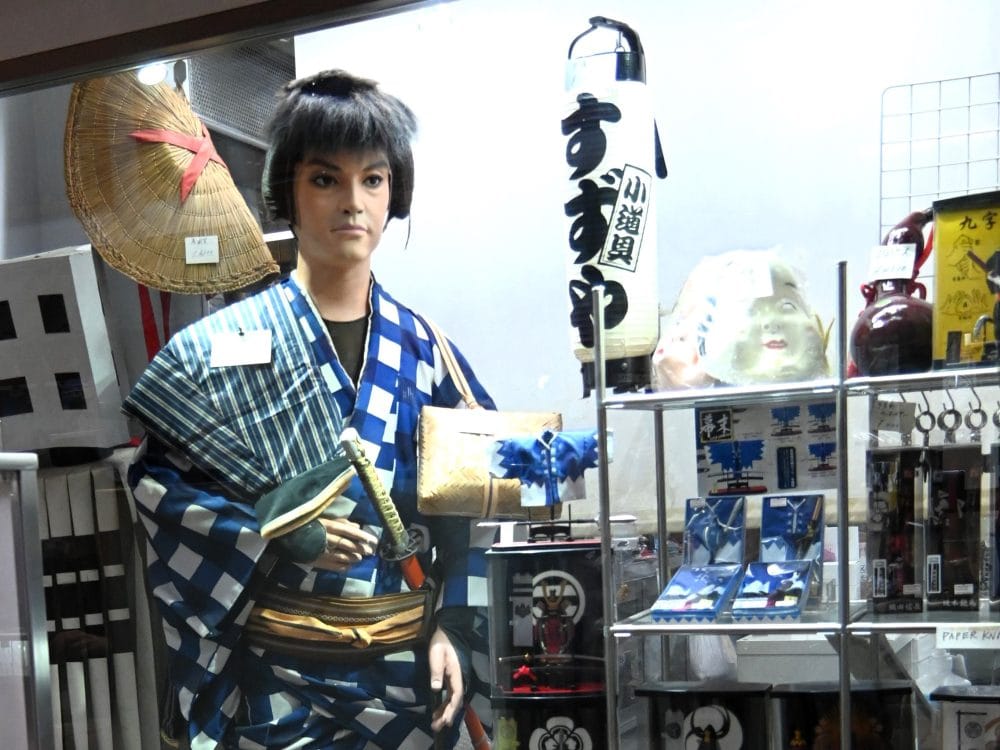
A supplier to performers of kabuki and traditional Japanese dance — folding fans, stage accessories, and a genuinely interesting glimpse behind the scenes of Japanese theater.
Fujigoromo
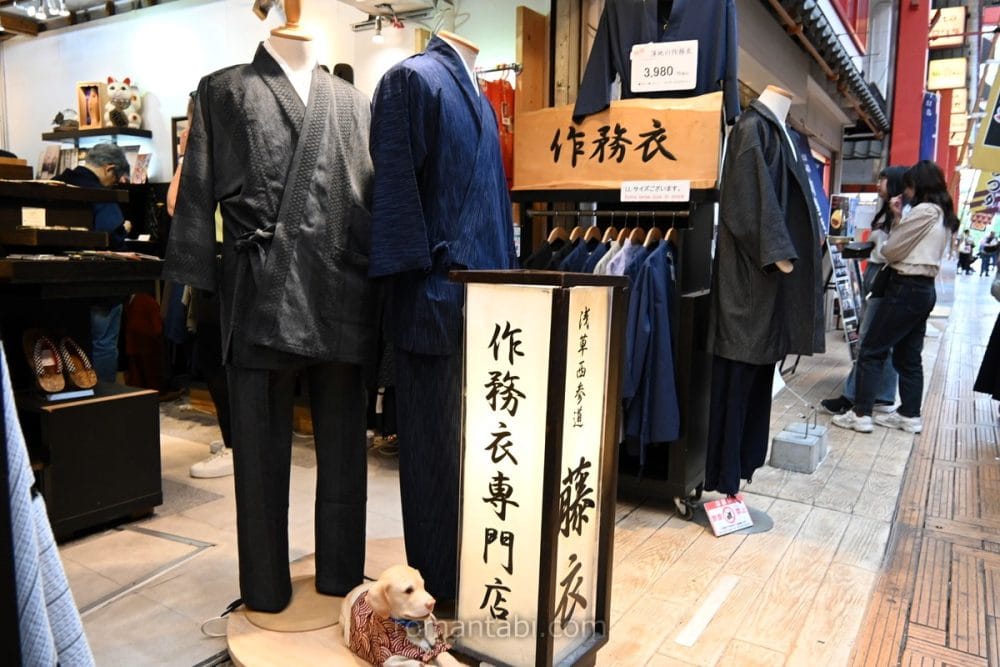
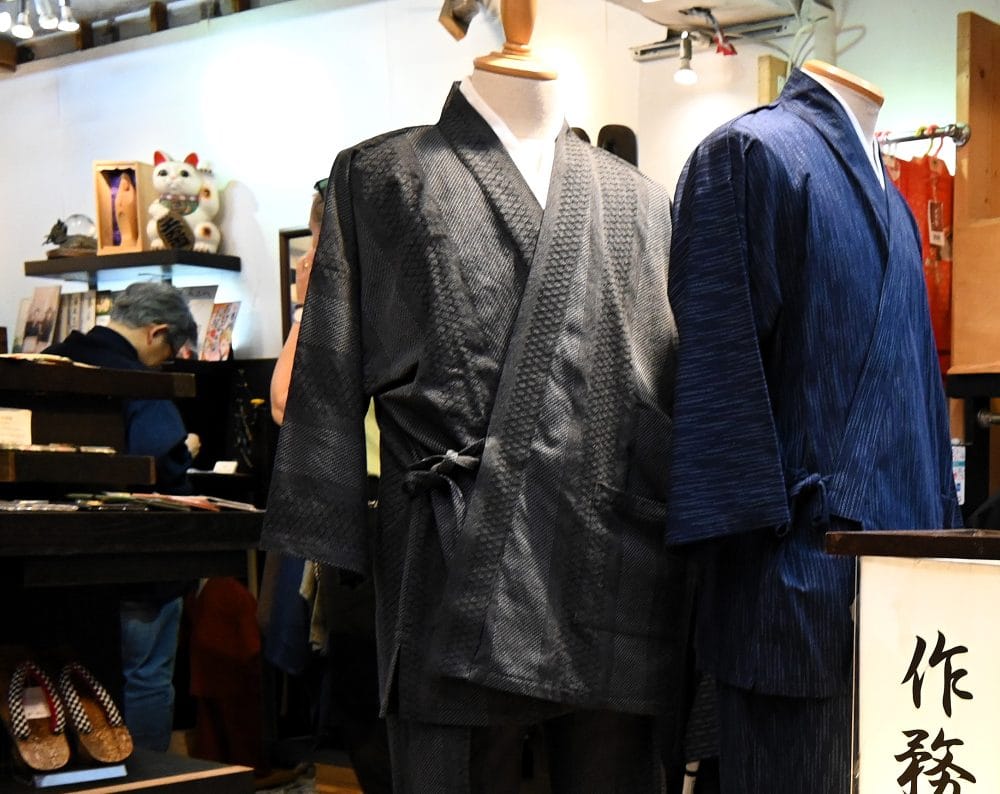
Kimono, yukata, and contemporary Japanese-inspired clothing, carefully made and reasonable as gifts or a treat for yourself.
Kagetsudo Shooting Gallery

An old-school shooting gallery with simple rules and small prizes — a fun, low-stakes stop with kids or a group.
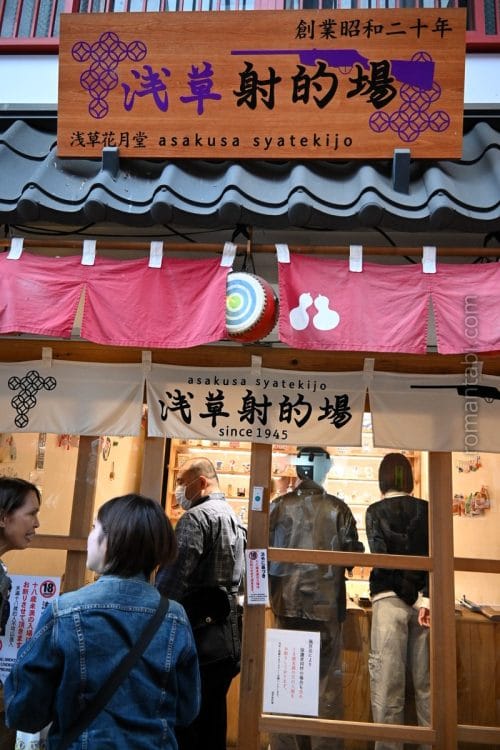
Photo Spots
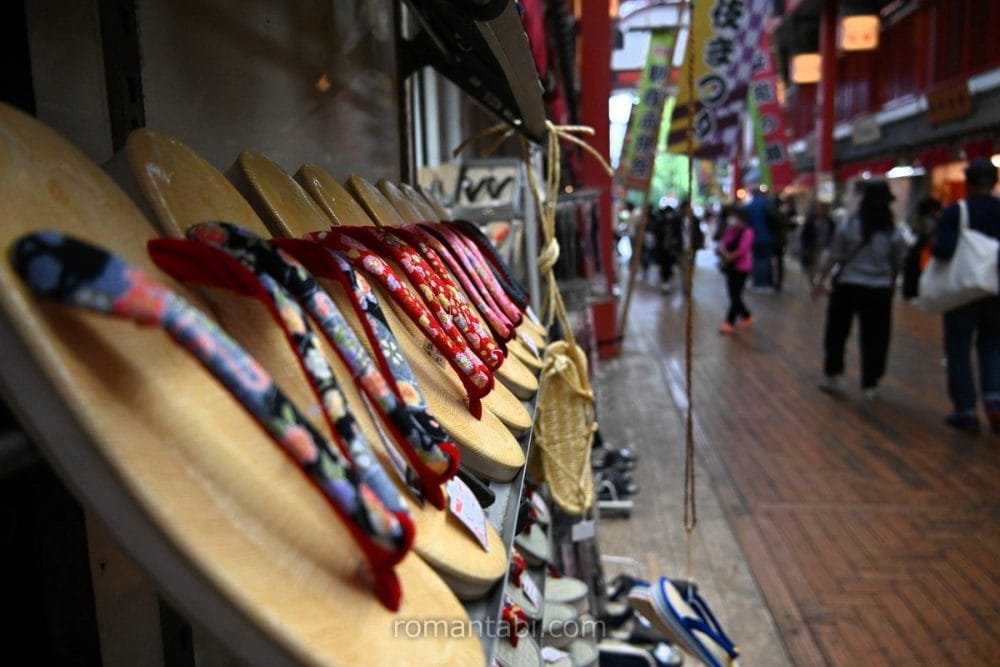
The covered arcade, the cypress flooring, and the festival banners all make for good backgrounds — and if you've rented a kimono nearby, this street is a much better backdrop for it than a crowded Nakamise. The entrance arch alone is worth a photo before you even walk in.
FAQ
What time does Nishi-Sando open?
Individual shop hours vary, but most open around 10:00 AM. Asakusa Kagetsudo's melon bread can sell out by midday, so go early if that's a priority.
What is Nishi-Sando known for?
Its cypress-wood flooring, kabuki-theater-style entrance arch, and a mix of traditional craft shops and street food — a quieter alternative to Nakamise Street.
Is Nishi-Sando covered, like an indoor arcade?
Yes — it's a fully covered shotengai, so it's a good option in bad weather.
Final Thoughts
Nishi-Sando won't be the highlight of your Asakusa itinerary, and it doesn't need to be. It's the street you duck into when Nakamise gets to be too much — better food, better photos, and none of the elbow-to-elbow crowd.
More on Asakusa
Nakamise classics and quieter local finds on the streets most visitors miss.
From Kameju's dorayaki to a lucky-cat shop only locals know about.
 Agoda
 Expedia
 Hotels.com


